
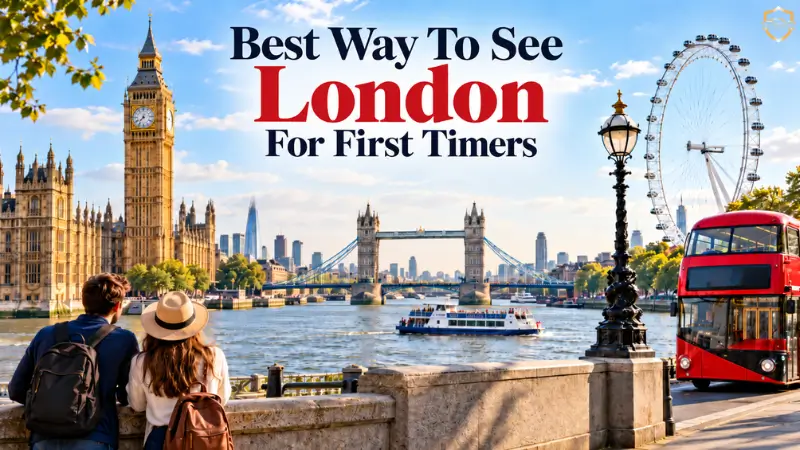
Planning your first trip to London can feel overwhelming. With hundreds of attractions, multiple transport options, and countless ways to explore the city, many visitors struggle to decide where to start and how to make the most of their limited time. Should you walk between landmarks, take public transport, join a sightseeing tour, or explore the city from the River Thames? Choosing the wrong approach can lead to wasted time, long queues, and missing some of London’s most memorable experiences.
In this guide, we’ll explore the best way to see London for first-timers, compare the most popular sightseeing methods, share an expert itinerary, highlight common mistakes to avoid, and provide practical tips to help you enjoy a smoother and more rewarding London visit.
What Is The Best Way To See London? Explore 7 Sightseeing Methods
The best way to see London sights depends on your schedule, budget, and the type of experience you want. For most first-time visitors, the ideal approach is to combine different sightseeing methods rather than relying on just one. Walking allows you to experience London’s streets and landmarks up close, while transport options help you cover longer distances efficiently.
Some travellers prefer exploring at their own pace on foot, while others want a more structured way to visit multiple attractions in a limited time. Below are seven popular ways to see London and how each option can fit into your sightseeing plan.
1. Chauffeur Service or Private Sightseeing Tours (Recommended)
A private chauffeur service or sightseeing tour allows visitors to explore London with a planned route and dedicated transport between attractions. It can be a practical option for travellers who want to visit several landmarks in one day without managing multiple transport connections or spending time planning every detail themselves.
This option is particularly useful for families, groups, business travellers, visitors with limited mobility, or those with a short stay in London. A private sightseeing tour can help you visit major attractions such as Buckingham Palace, Westminster Abbey, Big Ben, Tower Bridge, St Paul’s Cathedral, and the Tower of London while travelling comfortably between locations.
Another advantage is flexibility. Unlike fixed sightseeing routes, a private tour allows you to adjust your itinerary based on your interests and schedule. You can spend more time at attractions you enjoy, take breaks when needed, and create a sightseeing experience that suits your travel plans.
For visitors who want a more organised way to explore London while still having time to walk around and experience each attraction, a private sightseeing tour can be an effective choice.
2. On Foot
Walking is one of the best ways to see London, especially when exploring central areas where many famous landmarks are located close together. Unlike travelling underground, walking allows you to experience London’s architecture, streets, parks, and neighbourhoods along the way.
Many popular sightseeing routes can easily be explored on foot. For example, you can start at Buckingham Palace, walk through St James’s Park, continue to Westminster Abbey and Big Ben, then cross Westminster Bridge towards the South Bank and the London Eye. From there, you can continue along the River Thames towards attractions such as Tate Modern, Millennium Bridge, St Paul’s Cathedral, and Tower Bridge.
Walking also gives you the freedom to explore at your own pace. You can stop for photos, discover local areas, and spend more time at attractions you find interesting. However, because London is a large city, walking works best when combined with other transport options for longer journeys.
3. By Bicycle
Exploring London by bicycle offers a more active way to experience the city. Cycling allows you to cover more distance than walking while still enjoying views of London’s streets, parks, and neighbourhoods. It can be a great option for visitors who want to explore areas such as Hyde Park, Regent’s Park, Greenwich, or routes along the River Thames.
London has cycling routes and bike rental options that make it possible for visitors to explore independently. Cycling can also be useful for reaching places that are not part of the main tourist routes while giving you more flexibility than fixed transport schedules.
However, cycling may not suit every visitor. Central London can be busy, with heavy traffic and crowded streets, which may feel challenging for those unfamiliar with the city. Visitors who are confident cyclists can enjoy a unique perspective of London, while others may find walking or public transport more comfortable.
4. By River
Seeing London from the River Thames is one of the most memorable sightseeing experiences for first-time visitors. A river journey provides a different perspective of the city, allowing you to view some of London’s most famous landmarks from the water.
Many major attractions are located along the Thames, including the Houses of Parliament, Big Ben, London Eye, Tate Modern, St Paul’s Cathedral, Tower of London, and Tower Bridge. A Thames river cruise combines transportation with sightseeing, allowing you to enjoy views of the city’s skyline while travelling between different areas.
The river is also a useful way to connect sightseeing locations. For example, visitors can explore Westminster, take a boat towards the City of London, and continue their journey near Tower Bridge or Greenwich. Combining walking with a Thames experience is one of the most balanced ways to explore London.
5. A Red Double-Decker Bus
A red double-decker bus is one of the most recognisable ways to experience London. Unlike the Underground, where most of the journey happens below street level, travelling by bus allows you to see the city while moving between destinations.
Public buses are useful when you want to travel between areas while still experiencing London’s streets, buildings, and neighbourhoods. Sitting on the upper deck can provide excellent views, making even a regular journey part of your sightseeing experience.
However, buses are affected by London’s traffic, so they may not always be the fastest option during busy periods. They are best suited for visitors who want to enjoy the journey and see more of the city rather than simply reaching their destination as quickly as possible.
6. A Hop-On Hop-Off Sightseeing Bus
A hop-on hop-off sightseeing bus is a popular choice for visitors who want a simple introduction to London. These buses follow specially designed tourist routes connecting many major attractions, making them useful for travellers who are unfamiliar with the city’s layout.
The main advantage of this option is simplicity. Visitors can listen to sightseeing commentary, learn about landmarks during the journey, and get off at attractions they want to explore further. It can be especially useful on the first day of a London trip to understand the city’s main areas and decide which places to revisit.
However, hop-on hop-off buses are not always the quickest way to travel around London because traffic can affect journey times. They are best suited for visitors who prefer a structured sightseeing experience with less route planning.
7. London Underground
The London Underground, commonly known as the Tube, is one of the fastest and most efficient ways to travel around the city. With an extensive network connecting different areas of London, it is especially useful for reaching attractions that are too far apart to walk between.
The Tube is ideal for travelling between sightseeing areas such as Westminster, Kensington, Camden, and other parts of the city. It can save significant time when covering longer distances or returning to your accommodation after a full day of exploring.
However, the Underground is mainly a transport solution rather than a sightseeing experience. Since most journeys happen below ground, you miss the streets, architecture, and atmosphere of London above you. A common mistake is using the Tube for short journeys where walking would allow you to discover more of the city. The best approach is to use the Underground strategically while exploring nearby attractions on foot.
Which Way of Seeing London Is Best for You?
The best way to see London depends on several factors. These include time, budget, how you prefer to explore the city, and more. Let’s explore each option to help you choose the right approach for your London itinerary.
| Sightseeing Method | Best For | Main Benefits | Things to Consider |
| Chauffeur Service | Families, groups, business travellers, visitors with limited time, travellers wanting comfort | Door-to-door travel, personalised itinerary, saves planning time, easy access to multiple landmarks in one day | Higher cost compared with public transport; less suitable if you prefer exploring independently |
| Walking | First-time visitors who want to experience London closely | Best way to discover streets, architecture, parks, and hidden spots; ideal for central London landmarks close together | Requires comfortable shoes and may not be practical for covering the entire city |
| Bicycle | Active travellers and visitors who enjoy outdoor exploration | Covers more distance than walking, flexible, enjoyable in parks and riverside areas | Busy roads and traffic can make cycling challenging for unfamiliar visitors |
| River Thames Cruise / River Boat | Visitors who want iconic London views and a relaxing experience | Unique views of landmarks such as Big Ben, London Eye, Tower Bridge, and Tower of London; combines transport with sightseeing | Covers mainly riverside areas and does not replace other transport methods |
| Red Double-Decker Bus | Visitors who want to see London while travelling | Enjoy street-level views, experience a classic London tradition, useful between sightseeing areas | Traffic can affect journey times, especially during busy hours |
| Hop-On Hop-Off Sightseeing Bus | First-time visitors who want an easy overview of the city | Tourist-focused routes, landmark commentary, simple planning, flexible stops | Can be slower due to traffic and usually costs more than public buses |
| London Underground (Tube) | Visitors who want fast and affordable transport | Quick connection between different areas, extensive network, efficient for longer distances | Mostly underground, so you miss street-level views and atmosphere |
| Combination of Multiple Methods | Most first-time visitors | Offers the best balance of sightseeing, comfort, speed, and flexibility | Requires some planning to choose the right method at the right time |
Best Combination For First-Time Visitors – Expert London Sightseeing Itinerary
The best way to see London for the first time is to follow a logical route that groups attractions by location. Instead of travelling back and forth across the city, focus on connected areas and combine walking with transport options when needed.
This itinerary covers London’s royal landmarks, Westminster, the West End, the historic City of London, and the River Thames. It allows you to explore major attractions efficiently while leaving enough time to enjoy each area.
Morning: Explore Royal London
Start your day in Royal London, home to famous landmarks, royal residences, parks, and historic streets.
Your route can include:
- Buckingham Palace
- St James’s Palace
- The Mall
- St James’s Park
- Kensington Palace
- Kensington Gardens
This walking route connects London’s royal landmarks with green spaces such as St James’s Park and Kensington Gardens. Starting early helps you avoid larger crowds and enjoy better photo opportunities before moving to the next area.
Late Morning: Discover Westminster’s Iconic Landmarks
Continue towards Westminster, where several major landmarks are located within walking distance.
Your route can include:
- Westminster Abbey
- Big Ben
- Houses of Parliament
- Westminster Bridge
- London Eye
- Downing Street
This area is ideal for walking because the main attractions are close together. Take time to enjoy Thames views and photograph the surrounding landmarks before continuing into central London.
Midday: Experience Central London and the West End
After Westminster, continue towards the West End, known for its theatres, cultural attractions, shopping areas, and historic streets.
Your route can include:
- Trafalgar Square
- Nelson’s Column
- National Gallery
- Piccadilly Circus
- Leicester Square
- Covent Garden
- Royal Opera House
- The Strand
This area combines historic landmarks with London’s cultural and entertainment districts. Covent Garden is a convenient place to stop for lunch or a short break before continuing your sightseeing route.
Afternoon: Explore The Historic City of London
Continue east towards the City of London, one of the oldest parts of the capital, where historic landmarks sit alongside modern architecture.
Your route can include:
- St Paul’s Cathedral
- Millennium Bridge
- Tate Modern
- Shakespeare’s Globe
- The Monument
- London Bridge
- Tower of London
- Tower Bridge
This route connects major historical landmarks with Thames-side views. Millennium Bridge offers a direct view of St Paul’s Cathedral, while the walk towards Tower Bridge follows the River Thames through one of London’s most recognisable areas.
Evening: Enjoy London’s Riverside Views and Night Atmosphere
Finish your sightseeing day along the River Thames, where landmarks are illuminated after sunset.
Your evening route can include:
- St Katharine Docks
- Tower Bridge views
- River Thames walk
- London skyline viewpoints
After a full day of sightseeing, the evening is a good time for a relaxed Thames walk, an evening river cruise, or a convenient journey back to your accommodation using public transport, taxi, or private transport.
This route gives first-time visitors a balanced London experience by combining royal landmarks, historic attractions, cultural areas, and riverside views in one connected itinerary.
Common Mistakes First-Time Visitors Should Avoid
Planning your first London trip requires careful organisation. With hundreds of attractions, busy transport networks, and popular landmarks requiring advance planning, small mistakes can affect your itinerary. Avoiding these common mistakes will help you plan a smoother sightseeing experience.
Trying to See Too Much in One Day
Trying to visit too many attractions in one day can make your itinerary rushed. London has hundreds of landmarks, but moving between too many locations can leave less time to explore each place properly. Focus on a specific area and group nearby attractions together to create a more efficient sightseeing route.
Taking the Tube Between Attractions That Are Close Together
The London Underground is useful for travelling across the city, but using it for every short journey means missing London’s streets and architecture. Many central attractions, such as Buckingham Palace, Westminster Abbey, Big Ben, and the London Eye, are within walking distance of each other. Use the Tube for longer journeys and explore connected areas on foot.
Planning Attractions Without Considering Their Location
Planning your itinerary without checking attraction locations can lead to unnecessary travel. London is a large city, so crossing between distant areas multiple times in one day can make your route inefficient. Group attractions by area and create a route that connects nearby landmarks.
Spending Too Much Time Queuing
Long queues at popular attractions can affect your itinerary, especially during busy travel periods. Check whether attractions require advance booking and reserve tickets where possible. Visiting popular locations earlier in the day can also help reduce waiting times.
Wearing the Wrong Shoes for a Walking Day
Many visitors underestimate how much walking is involved when exploring London. Even with public transport, a sightseeing day can involve several hours of walking between attractions, stations, and restaurants. Wear suitable walking shoes and practical clothing for a full day of exploring.
Not Checking Opening Times or Booking Requirements
Not checking opening hours and ticket requirements can disrupt your sightseeing plans. Some attractions have specific opening days, timed entry systems, or require advance reservations. Check opening times and ticket requirements before visiting major landmarks.
Forgetting About London’s Weather
London’s weather can change quickly, and unexpected rain can affect outdoor sightseeing plans. Check the forecast before leaving and prepare with suitable clothing, such as a waterproof jacket or umbrella. Being prepared allows you to continue your plans even when the weather changes.
13 Important Tips For Seeing London For the First Time
Planning your first London visit can be much easier with the right approach. The city offers hundreds of attractions, but a smart itinerary, efficient route planning, and a few practical preparations can help you spend more time exploring and less time dealing with unnecessary problems.
These tips will help you make the most of your trip, whether you are visiting London for one day or planning a longer stay.
- Group Attractions by Area: London is a large city, so planning your route by location helps you spend less time travelling and more time exploring. Grouping nearby attractions makes your sightseeing day more efficient and easier to manage.
- Walk Between Nearby Attractions: Many famous London landmarks are closer together than visitors expect. Walking between attractions allows you to experience London’s streets, architecture, parks, and hidden spots along the way. Use public transport for longer journeys, but walk whenever attractions are within a reasonable distance.
- Start Sightseeing Early: Starting your day early helps you avoid large crowds and gives you more time to explore London’s most popular attractions. An early start also gives you more flexibility if your plans change later in the day.
- Wear Comfortable Shoes: Exploring London usually involves more walking than many visitors expect. Even when using public transport, you will still walk between attractions, stations, restaurants, and viewpoints. Comfortable shoes are essential when exploring areas such as Westminster, South Bank, Covent Garden, and central London.
- Plan Your Must-See Attractions First: Before creating your itinerary, decide which landmarks and experiences are most important to you. Plan your day around these priorities first, then add smaller attractions, cafés, parks, or shopping areas nearby.
This prevents you from spending your trip rushing between too many places. - Keep Your Itinerary Flexible: A good London itinerary needs some free time. Attractions may take longer than expected, weather conditions may change, or you may discover places you want to explore further. Leave gaps between activities so you can enjoy the city without constantly checking the time.
- Book Popular Attractions in Advance: Many major London attractions become busy, especially during weekends and peak travel seasons. Booking tickets in advance helps you secure entry times and avoid waiting in long queues. This is particularly useful for attractions with timed entry, including the London Eye, Tower of London, and Westminster Abbey.
- Experience London From the Thames: The River Thames offers a different view of London’s famous landmarks. Combining walking with a Thames experience gives you a more complete view of the city.
- Choose the Right Transport for Each Journey: London’s transport system makes it easy to move around the city, but choosing the right option can save time. Use the Underground for longer distances, buses when you want to enjoy views of London’s streets, and walking for exploring central areas. Contactless payment is the easiest way to pay for many public transport journeys. Make sure your bank card supports international payments before travelling.
- Check Opening Times Before Visiting Attractions: Opening hours can change depending on the season, holidays, or special events. Checking attraction schedules before your visit helps you avoid arriving when a location is closed and allows you to plan your route around timed entries.
- Avoid Planning Too Much in One Day: London has hundreds of attractions, and trying to see everything quickly can make your trip stressful. Focus on fewer areas and spend more time experiencing them instead of rushing from one landmark to another.
A well-paced itinerary usually creates a better sightseeing experience. - Explore London Beyond Famous Landmarks: The best way to see London is not only by visiting major attractions. Take time to explore local streets, parks, cafés, markets, and neighbourhoods between sightseeing stops.
- Combine Different Ways of Seeing London: The most enjoyable London sightseeing experience comes from combining different methods. Walk through historic areas, use public transport for longer distances, take a Thames cruise for unique views, and leave time to explore places you discover along the way. This approach helps you see more of London while still enjoying the journey.
Frequently Asked Questions (FAQs)
Can You See London’s Main Attractions In One Day?
Yes, you can see many of London’s main attractions in one day if you plan your route carefully. Focus on central areas such as Westminster, South Bank, and the City of London, where many landmarks are close together. A combination of walking and efficient transport will help you make the most of your time.
Is A Thames River Cruise Worth Doing?
Yes, a Thames River Cruise is worth considering, especially for first-time visitors. It offers unique views of landmarks such as Big Ben, the London Eye, Tower Bridge, and the Tower of London from the water. It is also a relaxing way to see more of London after walking.
Is A Private London Sightseeing Tour Worth It?
A Private London Sightseeing Tour can be a good option for visitors who want comfort, flexibility, and a personalised itinerary. It is especially useful for families, groups, business travellers, or those with limited time. You can visit multiple landmarks without managing complicated routes or transport changes.
Which Sightseeing Buses Offer The Best Routes For A First-Time Visitor In London?
Hop-on hop-off sightseeing buses are popular among first-time visitors because they cover many major attractions with guided commentary. Companies such as Big Bus Tours, Tootbus, and City Sightseeing offer routes connecting landmarks across central London. The best choice depends on your preferred route, schedule, and sightseeing style.
What Are The Best Companies Offering Private London Tours?
Easy Chauffeurs is one of the best chauffeur companies offering private London tours. They have experienced guides, PCO-licensed chauffeurs, comfortable vehicles, flexible itineraries, and positive customer reviews.
Which Companies Provide Family-Friendly London Sightseeing Packages?
Easy Chauffeurs provides family-friendly London sightseeing tour packages. They allow you enough time for breaks between attractions and personalised routes designed around your family’s needs.
What’s The Best Way To See London’s Street Art Via A Guided Tour?
A guided street art tour is the best way to discover London’s murals, artists, and hidden creative spaces across areas like Shoreditch, Brick Lane, and East London. Easy Chauffeurs offers private transport with a professional local chauffeur, allowing you to explore different street art locations at your own pace.
What Recommendations For A First-Time Visitor’s Itinerary Should You Follow When Visiting London?
First-time visitors should follow an itinerary that groups London’s major attractions by area, such as Royal London, Westminster, the West End, South Bank, and the City of London. Easy Chauffeurs offers private London sightseeing tours with half-day and full-day itineraries, allowing visitors to explore key landmarks with a professional chauffeur, comfortable vehicle, and a flexible route. You can follow a planned sightseeing itinerary or customise the tour based on your interests and available time.
Which Are The Top 10 Places To Visit In London That You Should Not Miss?
The top places to visit in London include Buckingham Palace, Big Ben, Westminster Abbey, London Eye, Tower of London, Tower Bridge, St Paul’s Cathedral, Trafalgar Square, Covent Garden, and the British Museum. These attractions showcase London’s history, culture, architecture, and famous landmarks.
What Is The Best Way To Travel Around London As A Tourist?
The best way to travel around London as a tourist is to combine walking with reliable transport options based on your itinerary. Easy Chauffeurs offers a private chauffeur service through a licensed PCO private hire operator, providing comfortable door-to-door travel for visitors who want a flexible and convenient way to explore London’s attractions.
Final Thoughts
The best way to see London attractions or landmarks for the first time is not about checking off as many attractions as possible. It is about creating a practical route that combines walking through historic areas with views of London from the River Thames.
A successful London itinerary combines different sightseeing methods based on your time, comfort, and interests. Walk where attractions are close together, use transport for longer journeys, and leave room for unexpected discoveries. Exploring the areas between landmarks often reveals parts of London that are missed on rushed itineraries.
Leave time for smaller experiences, such as walking through neighbourhoods, visiting parks, and enjoying riverside views. The best London trip is not the one where you see everything, but the one where you have enough time to appreciate the places you visit.

- Best Way To See London For First Timers – A Complete Sightseeing Guide - September 23, 2026
- Mercedes V Class Guide: Seating, Interior, Luggage Space, And Key Features Explained - September 12, 2026
- Mercedes People Carrier: Is the V-Class the Best Choice For UK Group Travel? - September 5, 2026