

To the average passenger, any car for hire looks the same. However, the legal distinction between hailing and booking is the difference between a safe journey and a major legal risk.
Choosing between a Taxi and a Private Hire Vehicle involves more than just looking for a roof light. It affects your insurance coverage, how much you pay, and whether the driver is operating legally.
This guide explains the core differences between these two services. So you can travel safely, legally, and at the right price.
What is the Main Difference Between Taxi and Private Hire Vehicle?
The core distinction between a taxi and a private hire vehicle (PHV) is the “right to hail.” Taxis are the only vehicles legally permitted to be flagged down on the street or to wait at designated ranks, making them the better choice for spontaneous travel.
Conversely, PHVs must be pre-booked through a licensed operator via an app, website, or phone call. It is illegal for a PHV driver to pick up a passenger who waves them down in public. This booking requirement ensures every trip is logged for safety. Accepting a “walk-up” passenger is a serious offense known as “plying for hire,” which carries heavy penalties and voids the driver’s insurance.
Taxis (Hackney Carriages)
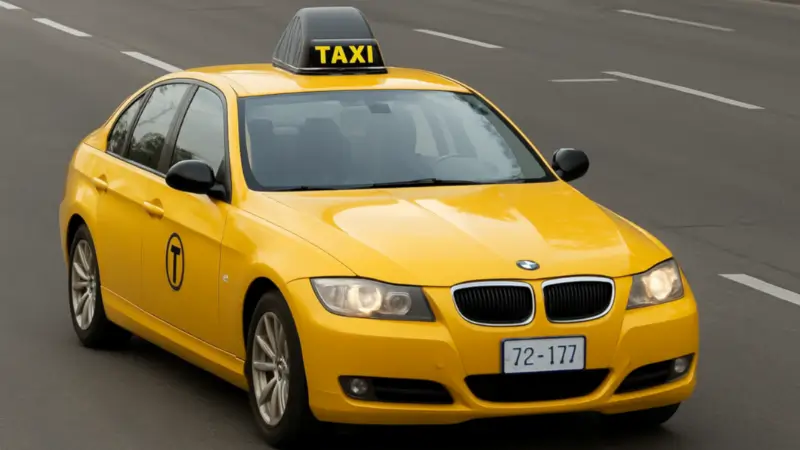
Taxis, or Hackney Carriages, are the only vehicles licensed for on-demand travel. Often purpose-built for accessibility—like the iconic London Black Cab—they are easily identified by an illuminated “Taxi” roof light. If the light is on, the vehicle is available to be hailed on the street or picked up at a designated taxi rank.
Fares are strictly regulated via a calibrated taximeter, which calculates the cost based on distance and time using tariffs set by the local council. This ensures consistent pricing for spontaneous trips. As part of the public transport network, taxis also gain time-saving privileges, such as the legal right to use dedicated bus lanes to bypass traffic.
Private Hire Vehicles (PHVs)
Private Hire Vehicles (PHVs), such as Easy Chauffeurs, are for pre-arranged travel only. Unlike taxis, PHVs are usually standard four-door cars and lack roof lights. To stay legal, they must display council-issued “Private Hire” plates and door stickers explicitly stating they must be pre-booked.
All journeys must be booked through a licensed operator via an app or phone. This allows for fixed or estimated fares upfront, providing price certainty for long trips like airport transfers. Crucially, pre-booking is a legal requirement for insurance; if a PHV driver picks up a passenger without a booking, their “hire and reward” insurance is void, leaving both parties unprotected in an accident.
Taxi vs Private Hire: Features at a Glance
Choosing between a taxi and private hire depends on whether you value immediate availability or price certainty. While taxis offer spontaneous pickups in busy areas, private hire services provide a scheduled, fixed-price alternative. Let’s explore the comparison:
| Feature | Taxi | Private Hire |
| Hailing | Can be flagged down on the street. | Illegal to hail; it must be pre-booked. |
| Taxi Ranks | Permitted to wait at designated ranks. | Not allowed to use taxi ranks. |
| Booking | No booking required for street pickups. | Must be booked via app, web, or phone. |
| Pricing | Uses a regulated, calibrated meter. | Usually offers a fixed, agreed-upon fare. |
| Roof Light | Features an illuminated “Taxi” sign. | No roof light permitted. |
| Vehicle Type | Often purpose-built (e.g., Black Cab). | Generally standard 4-door passenger cars. |
| Identification | Distinctive colors or specific branding. | Displays “Pre-booked only” door stickers. |
| Bus Lanes | Usually granted access to bus lanes. | Generally restricted from using bus lanes. |
| Availability | Best for spontaneous, immediate trips. | Best for scheduled or long-distance trips. |
| Insurance | Covered for public “hire and reward.” | Insurance is only valid if pre-booked. |
Which One Should You Choose? Expert Opinion
Choosing between a taxi and private hire is a trade-off between immediate availability and price certainty. Picking the wrong one can lead to “price shock” on a metered fare, or worse, an uninsured journey if you hail a private car illegally.
This expert breakdown compares metered spontaneity against fixed-price security. Whether you are heading to the airport or need a late-night ride home, here is exactly which service to choose for every scenario to save you time and money.
When Should You Choose a Taxi?
Choose a taxi when speed and spontaneity are your priorities. Because they wait at ranks and cruise for passengers, you can start your journey instantly without waiting for a vehicle to arrive at a GPS pin. They are the most reliable option near major transit hubs like stations and airports, or during bad weather when you need immediate shelter.
Taxis are also ideal if you want to avoid “surge pricing.” Since fares are determined by a council-regulated meter, the rate remains consistent regardless of demand. If you prefer a “hop-in-and-go” service without using an app or pre-planning, a taxi is the best fit for your trip.
When Should You Choose Private Hire?
Private hire is the best choice for planned trips where price certainty is a priority. For long-distance journeys, operators typically provide a fixed quote upfront. Unlike a metered taxi, this price remains unchanged regardless of traffic or detours, making it easier to budget and avoiding “price shock” at the end of the trip.
Additionally, pre-booking allows for specific vehicle requests that street-hail taxis can’t always meet, such as an 8-seater minibus for groups or an executive sedan. The system also enhances safety; because you receive the driver’s name, photo, and registration details before they arrive, you know exactly who is picking you up. This makes private hire ideal for scheduled appointments and late-night residential pickups.

Frequently Asked Questions (FAQs)
Do I Have To Tip Both?
Tipping is optional for both services, though rounding up the meter for taxis or using the app’s tip feature for private hire is common. It remains a personal choice based on the quality of service.
Is Uber A Taxi Or Private Hire?
Uber is a private hire service because all trips must be pre-booked through an app. Drivers cannot legally pick up street hails or wait at designated taxi ranks.
Can Private Hire Vehicles Use A Taxi Rank?
No, taxi ranks are exclusively for Hackney Carriages. Private hire drivers who use them risk fines or license revocation for “plying for hire.”
What License Do I Need To Be Private Hire?
You need a Private Hire Driver License from your local authority like Transport For London (TfL). This requires passing a background check (DBS), a medical exam, and licensing your vehicle for private hire use.
Who Is The Best Private Hire London?
London’s best private hire service depends on your needs: easychauffeurs.com provides reliable, premium, and the most cost-effective transfer service for daily travel.
What Is A Private Hire Vehicle?
A private hire vehicle (PHV) is a licensed car that must be pre-booked through an operator rather than hailed on the street. Because they cannot use taxi ranks, a pre-existing booking is legally required to validate the driver’s insurance and the safety of the trip.
Conclusion
Finally, the difference between taxi and private transfer is a choice between spontaneity and predictability. While the taxi offers the freedom to move the moment you step onto the curb, private hire provides the security of a fixed price and a digital paper trail.
Regardless of which you prefer, the legal distinctions are absolute. Choosing a ride isn’t just about convenience; it’s about navigating a system designed for your safety. Always remember: a “quick lift” in an unbooked car isn’t just illegal—it’s an uninsured risk. In any city, the most expensive ride you can take is the one that happens off the books.